Water Conservation: Solutions Farmers Can Use to Conserve and Optimize Water Resources
- Farmer Federation
- Aug 22, 2025
- 2 min read
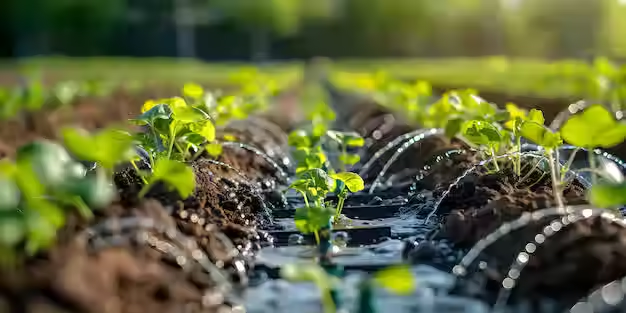
Conserving water is probably one of a sustainable farm's most critical and essential needs. While many water conservation methods are used by the Canadian agricultural sector across the country, specific water conservation and optimization strategies are usually based on local environmental conditions, agricultural needs and water availability. Modern agricultural farming involves methods such as precision irrigation, rainwater harvesting, reusing wastewater, using soil moisture seniors, cover crops and AI and loT innovative technology as some of the standard methods
Smart versus Precision Irrigation
Precision irrigation involves delivering the exact amount of water needed for crops in a targeted manner. It uses drip systems, sprinklers, and soil moisture sensors to ensure efficient watering. This type of irrigation reduces runoff and evaporation and works better for small-scale farms or farms with specific water restrictions.
Smart irrigation uses AI, loT, and automation to analyze data and adjust water delivery. The technology used for this type integrates real-time weather data, soil sensors, and cloud-based systems for decision-making. It can be monitored and adjusted remotely via smartphone apps or smart controllers. This system is beneficial because it allows farmers to maximize water resource usage and prevent them from overwatering. No system is truly better than the other, but smart can enhance precision irrigation if both are used together.
Long Term Benefits
The list of lasting advantages of conserving water for agricultural purposes is endless. Some of the more notable include reducing waste and preserving water resources, which is helpful in drought regions or water scarcity. Optimal watering translates to healthier crops, leading to better yields, improved growth rates, and higher quality produce, resulting in farmers getting more substantial crop market value.
Precision irrigation helps to maintain soil structure, prevents runoff, and makes the soil healthier for sustained farming. With climate change causing unpredictable weather patterns, smart irrigation systems allow farmers to adapt and optimize water use based on real-time conditions, which ensures resilience in changing climates.
The Living Labs Approach
Traditional irrigation methods are less precise, use more water, and cost farmers more money. Living Labs’ approach to water conservation involves more innovative, real-time testing of sustainable solutions. This requires precision irrigation techniques like drip, soil moisture sensors, AI-driven irrigation systems, rainwater harvesting and recycling, improved soil and crop management, more nature-based solutions, intelligent monitoring, and data-driven decision-making.
The hands-on work Living Labs is doing by integrating scientific research, traditional knowledge, and community engagement at various locations across Canada and our province is a more environmentally sustainable approach to agriculture. To learn more about living lab, visit us at www.acsnl.ca or our NLFA social media channels.


Comments